
Seamless Rain Gutters in Starke County, Indiana (IN)
From one end of Starke County to the other, our crews form gutters on site so each run goes up whole, with the coil color settled against your trim first.
The call costs nothing and commits you to nothing. Any trip fee for the measure is named when the date is set, and the written figure follows the measure.
Getting those custom water drainage channels installed around Starke County
You can protect your home from water damage by installing a continuous metal drainage system that runs along your roofline. This setup catches rainfall without any seams to leak or sag over time. It keeps your siding dry and prevents rot from ruining your foundation.
Why these long metal channels matter for your roof
Choosing a single run of material means there are no joints to fail during heavy storms. This design prevents leaks from forming at the corners or middle sections. That means you avoid expensive water damage to your wooden fascia boards or exterior paint.
Because these tubes come in one piece, they stay stronger against wind and heavy rain. Most folks here appreciate how they look clean and modern on any style of building. This aesthetic benefit adds a touch of curb appeal while keeping your home dry and safe.
Technical details about the installation process
Local pros use a specialized machine to form the metal right on your property. This process ensures the exact length fits your roofline perfectly without any gaps. It effectively channels water away from your siding and keeps your flower beds from washing away.
Besides the fit, you should always look for a professional who uses high quality fasteners and hangers. These components keep the system firmly attached during rough weather. That strength gives you peace of mind that your investment will last for a long time.
How the local climate affects your drainage needs
Heavy rainfall can overwhelm older or poorly maintained systems in Indiana. Having a wide enough channel capacity ensures that water moves away quickly during a downpour. This rapid drainage stops overflow from splashing onto your windows or entry doors.
Also, consider how seasonal changes affect the way debris builds up inside your troughs. A smooth interior surface helps leaves and twigs slide out rather than snagging on joints. Which means you spend less time cleaning and more time enjoying your peaceful home.
Picking the right materials for your house
You might choose between aluminum or steel based on your local surroundings. Aluminum is lightweight and resists rust well in our wet weather. That lighter weight puts less stress on your roof edges and keeps the structure sound.
Steel offers a tougher build if you worry about falling branches or heavy ice. While it weighs more, it handles physical impacts better than softer metals. You should compare these options with a pro to see which fits your budget and needs.
Ensuring your home stays dry throughout the year
Checking your drainage setup twice a year prevents small issues from becoming big bills. You want to make sure the downspouts are clear and pointing far from your basement. This simple maintenance step preserves the structural integrity of your property for years.
When you notice water dripping behind the channels, it might be time for a fresh installation. A licensed and insured worker can inspect your current setup for signs of wear. That expert evaluation helps you decide if you need a full replacement or just minor adjustments.
Taking the next step for your home project
You deserve a system that functions well and looks great on your house. Requesting a free quote allows you to compare options without feeling any pressure to buy. A local crew will visit your site to measure the roof and suggest the best water management solution.
Getting this project done is the best way to safeguard your biggest investment. You can easily describe your specific needs to start the process today. Just provide a few details to get connected with a skilled pro who knows how to handle seamless gutter work.
Why one piece beats twenty-two
A sectional gutter arrives from a shelf in short lengths and gets stitched together on your fascia. A seamless gutter leaves our machine as a single ribbon of aluminum, already the length of the run it will serve. Everything below follows from that difference.
Profiles and sizes we roll
The machine changes its forming head, not its habits. Whichever profile your house calls for, the run still comes off the coil in one piece.
Not sure which size your roof sheds into? That is a measuring question, not a guessing question, and one call books the measure.
The craft, run by run
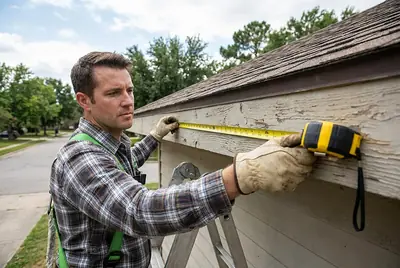
The measure that rules the job
Every fascia gets walked and taped before anything is ordered. The numbers written that day are the numbers the machine obeys.
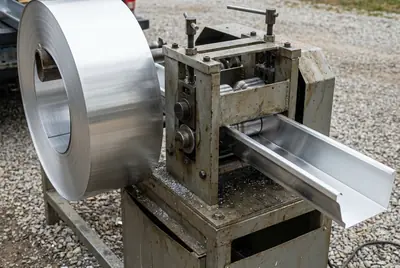
Forming at the curb
Flat coil goes into the roll former on the truck and a finished gutter profile comes out, cut off at the length of your run and not an inch more.
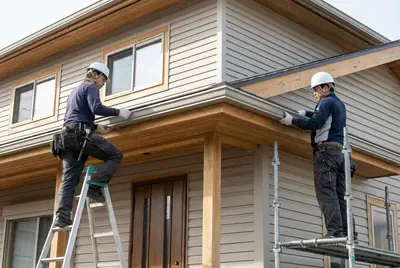
Hanging to a true pitch
Hidden hangers screwed into sound fascia, spaced for snow country where it applies, with a fall toward the outlet you can check with a hose.
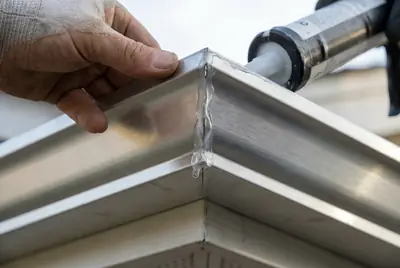
Corners mitered by hand
The only seams a seamless system has live at the corners, so ours are cut, lapped, riveted and sealed like they matter. Because they do.
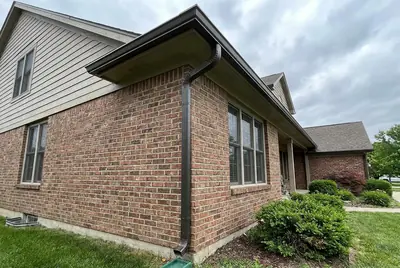
Downspouts that finish the story
Sized to the gutter that feeds them, dropped where the water should land, with extensions that carry it clear of the foundation.
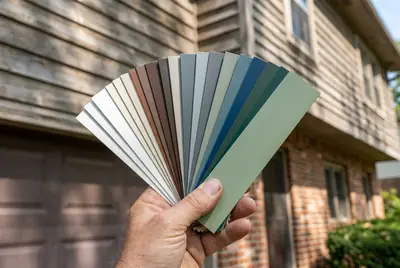
Color read against your trim
Factory painted coil comes in dozens of stock shades. We hold the chart against your fascia in daylight, not in a catalog.
The machine comes to you
Call the crew
One call to (855) 629-1479: ZIP, the kind of run and a word on the roofline. Under a minute, and nothing else is asked of you yet.
The measurer listens
On that same call the measurer hears the roofline out and books a time that suits the house.
Tape on fascia
Runs, drops, corners and colors are measured and settled on site. You get one written figure that holds.
The machine arrives
Forming day. The truck parks, the coil rolls, and each gutter comes off at the exact length it was measured for.
Hung and rinsed
Runs go up on hidden hangers, corners are sealed, downspouts dropped, and water is run through before we pull away.
What a foot of gutter costs
Stories, ladder access and fascia condition move a footage price up or down, which is why we measure before we promise. The figure you sign is the figure you pay.
Color comes off the coil, not out of a paint can
Seamless gutter stock arrives as factory painted aluminum coil, baked finish on both faces, in dozens of standing shades from bright white through bronzes and into true black. Because the color is cured onto the metal before it ever reaches the forming machine, it does not brush off, and it weathers evenly along the whole run.
Matching is done at your house. The measurer brings the coil chart to the fascia and reads it in your daylight, against your trim, your siding and your roof edge. Most homes want the gutter to disappear into the trim line; some want the downspouts to vanish against the siding instead, and the two choices are allowed to differ. If your trim sits between two stock shades, we will say so plainly and show you both instead of promising a custom tint we cannot roll.
What homeowners ask before signing
What does seamless actually mean here?
Each straight run is one continuous piece of metal, formed at your house to the length of that fascia. The only joints in the whole system sit at corners and outlets, where they are riveted and sealed by hand.
How long does the machine spend at my house?
For most homes the forming and the hanging fit inside a single visit. Long wraparound rooflines or three stories of ladder work can stretch it, and the quote says so before anyone commits.
Can you really match my trim color?
From dozens of factory painted coil shades, almost always closely enough that visitors never think about it. When your trim falls between two stock shades, you see both charts at the fascia and pick with your own eyes.
What happens to the gutters already on the house?
They come down the same day, fasteners and all, and leave in our truck for recycling. The tear off is its own line on the written quote, never a surprise.
Are corners a weak point?
They are the only seams the system has, which is exactly why they get the slow treatment: hand cut miters, riveted laps and sealant rated for wet metal. A corner done that way outlives the sealant tube it came from many times over.
Is a small house worth a seamless run?
Yes, the machine rolls a 20 ft run as happily as a 60 ft one. A small job minimum applies because the truck travels whole, and it is printed on the quote so you can judge it in writing.
Rooflines around Starke County
The terrain sets the pitch and the trees set the debris. The lists further down name every community the truck reaches from here.
Towns of Starke County on our route sheet
- Seamless Rain Gutters in Knox, IN (home to 3,609)
- Seamless Rain Gutters in North Judson, IN (home to 2,057)
- Seamless Rain Gutters in Koontz Lake, IN (home to 1,538)
- Seamless Rain Gutters in Bass Lake, IN (home to 1,430)
- Seamless Rain Gutters in San Pierre, IN (home to 65)
The rest of Indiana, county after county
- Seamless Rain Gutters in Adams County, IN
- Seamless Rain Gutters in Allen County, IN
- Seamless Rain Gutters in Bartholomew County, IN
- Seamless Rain Gutters in Benton County, IN
- Seamless Rain Gutters in Blackford County, IN
- Seamless Rain Gutters in Boone County, IN
- Seamless Rain Gutters in Brown County, IN
- Seamless Rain Gutters in Carroll County, IN
- Seamless Rain Gutters in Cass County, IN
- Seamless Rain Gutters in Clark County, IN
- Seamless Rain Gutters in Clay County, IN
- Seamless Rain Gutters in Clinton County, IN
- Seamless Rain Gutters in Crawford County, IN
- Seamless Rain Gutters in Daviess County, IN
- Seamless Rain Gutters in DeKalb County, IN
- Seamless Rain Gutters in Dearborn County, IN
- Seamless Rain Gutters in Decatur County, IN
- Seamless Rain Gutters in Delaware County, IN
- Seamless Rain Gutters in Dubois County, IN
- Seamless Rain Gutters in Elkhart County, IN
- Seamless Rain Gutters in Fayette County, IN
- Seamless Rain Gutters in Floyd County, IN
- Seamless Rain Gutters in Fountain County, IN
- Seamless Rain Gutters in Franklin County, IN
- Seamless Rain Gutters in Fulton County, IN
- Seamless Rain Gutters in Gibson County, IN
- Seamless Rain Gutters in Grant County, IN
- Seamless Rain Gutters in Greene County, IN
- Seamless Rain Gutters in Hamilton County, IN
- Seamless Rain Gutters in Hancock County, IN
One ribbon of metal per run, and the drips have nowhere left to start.
Call (855) 629-1479