
Seamless Rain Gutters in Illinois (IL)
Anywhere in Illinois, the forming machine comes to the house. One continuous gutter per run, downspouts sized to match, one written figure for all of it.
A written figure after a real measure, and the decision stays yours.
- Counties covered
- 102
- Region
- Midwest
- Largest city
- Chicago
Protecting Your Illinois Home From Water Damage
Safeguarding your biggest investment starts right at the roofline. Today we explore how custom metal channels manage heavy downpours across the Prairie State. This lets you avoid expensive foundation repairs down the road.
Eventually every homeowner faces the nightmare of a flooded basement. Now you can stop stressing about pooling water near your exterior walls. This proactive step ensures your property stays dry through every spring storm.
Understanding The Local Climate And Precipitation
Weather patterns in this Midwest region bring intense rainstorms throughout the year. Therefore your property needs robust defenses against sudden downpours. This protects your landscaping from eroding away during severe weather events.
Temperatures swing wildly from freezing winters to humid summers here. Consequently your roof drainage system expands and contracts constantly. Choosing durable materials prevents warping and cracking under thermal stress.
Managing Heavy Storms Effectively
Intense rainfall requires massive water-carrying capacity. Properly sized troughs catch every drop rolling off your shingles. This prevents overflowing that normally stains your siding.
Stormwater needs a clear path away from your foundation. Downspouts direct runoff safely toward your yard or street. This saves you from dealing with soggy lawns and damp crawlspaces.
Handling Freezing Winter Conditions
Ice dams form easily when melting snow refreezes at the roof edge. Strong metal installations support heavy winter weight without sagging. This means you avoid destructive ice backups underneath your shingles.
Freezing temperatures make brittle materials snap like dry twigs. Seamless aluminum channels bend slightly without breaking under ice pressure. This durability keeps your drainage working all winter long.
The Superior Design Of Custom Drainage Systems
Traditional sectional troughs leak at every single joint over time. Custom-rolled aluminum formed right at your job site eliminates those weak spots entirely. This grants you a leak-free exterior that lasts for decades.
Custom fabrication means exact measurements for your specific house layout. Contractors measure your roofline precisely before rolling out the continuous metal. This custom fit enhances your property exterior instantly.
| Feature | Traditional Sections | Custom Continuous Runs |
|---|---|---|
| Joints | Many seams prone to leaks | Zero seams except at corners |
| Lifespan | Ten to fifteen years | Twenty to thirty years |
| Appearance | Prone to sagging and pulling | Flush profile matching your trim |
Matching your exterior paint colors boosts curb appeal tremendously. Factory-baked finishes resist fading under harsh UV rays. This keeps your home looking sharp without constant repainting chores.
Choosing The Right Materials For Your House
Aluminum remains the top choice for residential water management today. It never rusts even when standing water sits inside the channel. This alloy provides lightweight strength that protects your fascia boards.
Copper offers an upscale look that develops a rich patina over time. Premium properties often feature this high-end metal for timeless beauty. Though expensive, copper lasts practically forever with zero maintenance.
Aluminum Options And Benefits
Most local contractors stock dozens of color choices for aluminum coils. This variety lets you match your exact siding and trim shades. You get a cohesive look that pleases the entire neighborhood.
Thicker gauge metal resists denting from falling tree branches. Investing in heavy-duty material pays off during severe hail storms. Your investment stays dent-free and fully functional year after year.
Steel Durability Considerations
Galvanized steel handles physical impacts better than almost any other metal. However, scratched surfaces can develop rust spots if left untreated. Regular inspections keep your steel channels performing at their absolute best.
Weight requires sturdier hanging brackets spaced closer together. Professional installation ensures your fascia boards support the heavy steel safely. This prevents catastrophic pulling during heavy downpours.
Professional Installation Versus DIY Projects
Hanging roof drainage looks simple until you climb a tall ladder. Precision pitching requires specialized tools and experienced eyes. Hiring local pros ensures correct water flow toward your downspouts.
Safety accidents happen frequently to weekend warriors working at roof heights. Trained technicians carry full insurance to protect you from liability. This peace of mind is worth every single penny.
The Roll-Forming Process On Site
Specialized machines shape flat metal coils directly outside your front door. Continuous runs mean fewer joints and zero leaks. This custom manufacturing process guarantees a flawless fit.
Workers feed aluminum through heavy metal rollers with extreme care. Watching the channel emerge in one long piece feels truly satisfying. You get industrial-strength quality built specifically for your dwelling.
Securing Proper Pitch And Slope
Water does not flow uphill on its own power. Installers measure a specific drop per foot toward each downspout. This exact slope prevents stagnant water breeding mosquitoes in your troughs.
Hidden hangers lock the metal securely to your roof framing. These fasteners stay invisible from the ground for a cleaner look. Your drainage system handles massive loads without pulling loose.
Maintenance Tips For Long-Lasting Performance
Falling autumn leaves clog drainage systems faster than anything else. Regular cleaning prevents organic debris from rotting inside your metal troughs. This simple chore saves you from expensive overflow damage.
Installing quality guards keeps leaves out while letting water pour through freely. Mesh screens block twigs and helicopter seeds from entering the system. This upgrade reduces your cleaning chores to practically zero.
Checking Downspout Clearances
Water needs to empty at least several feet away from your foundation. Splash blocks or extensions guide runoff safely past your basement walls. This prevents hydrostatic pressure from cracking your concrete.
Clogged downspouts cause water to back up into your roof structure. Flushing them with a garden hose reveals hidden blockages immediately. Keeping lines clear ensures trouble-free operation during heavy thunderstorms.
Inspecting Fasteners And Sealants
Temperature changes cause metal to shift against its mounting brackets. Checking corner miters yearly prevents tiny leaks from starting quietly. Applying fresh sealant where needed stops minor issues instantly.
Loose screws need tightening before wind gusts rip the channel down. Proactive maintenance extends the operational life of your roof drainage significantly. Your house stays protected through every changing season.
Taking Action To Secure Your Free Estimate
Waiting for a major leak before upgrading is a huge mistake. Protecting your home today saves you thousands in future structural repairs. Local professionals are ready to evaluate your current setup right now.
Requesting your zero-cost evaluation takes only a few minutes of your time. Friendly contractors visit your property to measure your exact roofline dimensions. You receive a transparent breakdown with zero hidden fees attached.
Do not let another heavy storm threaten your basement and foundation. Reach out to schedule your complimentary assessment with local experts today. Taking this simple step guarantees lifelong protection for your dwelling.
Why one piece beats twenty-two
A sectional gutter arrives from a shelf in short lengths and gets stitched together on your fascia. A seamless gutter leaves our machine as a single ribbon of aluminum, already the length of the run it will serve. Everything below follows from that difference.
Profiles and sizes we roll
The machine changes its forming head, not its habits. Whichever profile your house calls for, the run still comes off the coil in one piece.
Not sure which size your roof sheds into? That is a measuring question, not a guessing question, and the measure is free.
The craft, run by run
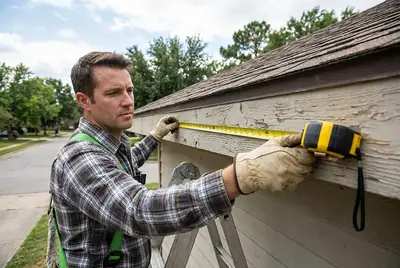
The measure that rules the job
Every fascia gets walked and taped before anything is ordered. The numbers written that day are the numbers the machine obeys.
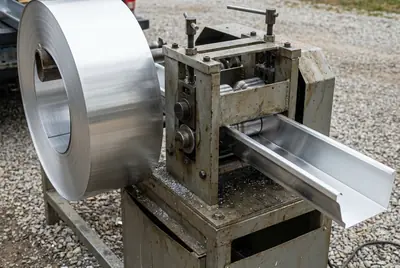
Forming at the curb
Flat coil goes into the roll former on the truck and a finished gutter profile comes out, cut off at the length of your run and not an inch more.
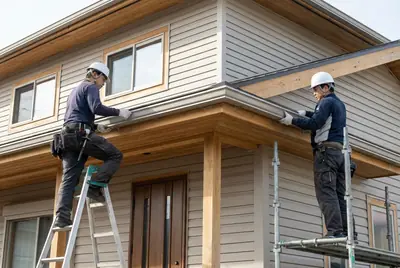
Hanging to a true pitch
Hidden hangers screwed into sound fascia, spaced for snow country where it applies, with a fall toward the outlet you can check with a hose.
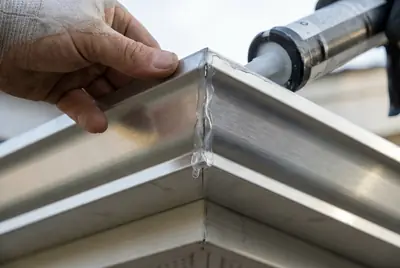
Corners mitered by hand
The only seams a seamless system has live at the corners, so ours are cut, lapped, riveted and sealed like they matter. Because they do.
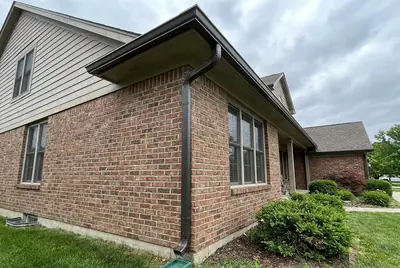
Downspouts that finish the story
Sized to the gutter that feeds them, dropped where the water should land, with extensions that carry it clear of the foundation.
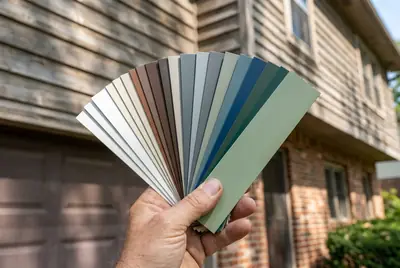
Color read against your trim
Factory painted coil comes in dozens of stock shades. We hold the chart against your fascia in daylight, not in a catalog.
The machine comes to you
Send the form
ZIP, the kind of run, your name and number. Under a minute, and nothing else is asked of you yet.
The callback
A measurer rings back inside a working day, hears the roofline out and books a time that suits the house.
Tape on fascia
Runs, drops, corners and colors are measured and settled on site. You get one written figure that holds.
The machine arrives
Forming day. The truck parks, the coil rolls, and each gutter comes off at the exact length it was measured for.
Hung and rinsed
Runs go up on hidden hangers, corners are sealed, downspouts dropped, and water is run through before we pull away.
What a foot of gutter costs
Stories, ladder access and fascia condition move a footage price up or down, which is why we measure before we promise. The figure you sign is the figure you pay.
Color comes off the coil, not out of a paint can
Seamless gutter stock arrives as factory painted aluminum coil, baked finish on both faces, in dozens of standing shades from bright white through bronzes and into true black. Because the color is cured onto the metal before it ever reaches the forming machine, it does not brush off, and it weathers evenly along the whole run.
Matching is done at your house. The measurer brings the coil chart to the fascia and reads it in your daylight, against your trim, your siding and your roof edge. Most homes want the gutter to disappear into the trim line; some want the downspouts to vanish against the siding instead, and the two choices are allowed to differ. If your trim sits between two stock shades, we will say so plainly and show you both instead of promising a custom tint we cannot roll.
What homeowners ask before signing
What does seamless actually mean here?
Each straight run is one continuous piece of metal, formed at your house to the length of that fascia. The only joints in the whole system sit at corners and outlets, where they are riveted and sealed by hand.
How long does the machine spend at my house?
For most homes the forming and the hanging fit inside a single visit. Long wraparound rooflines or three stories of ladder work can stretch it, and the quote says so before anyone commits.
Can you really match my trim color?
From dozens of factory painted coil shades, almost always closely enough that visitors never think about it. When your trim falls between two stock shades, you see both charts at the fascia and pick with your own eyes.
What happens to the gutters already on the house?
They come down the same day, fasteners and all, and leave in our truck for recycling. The tear off is its own line on the written quote, never a surprise.
Are corners a weak point?
They are the only seams the system has, which is exactly why they get the slow treatment: hand cut miters, riveted laps and sealant rated for wet metal. A corner done that way outlives the sealant tube it came from many times over.
Is a small house worth a seamless run?
Yes, the machine rolls a 20 ft run as happily as a 60 ft one. A small job minimum applies because the truck travels whole, and it is printed on the quote so you can judge it in writing.
Rooflines around Illinois
The terrain sets the pitch and the trees set the debris. The lists further down name every community the truck reaches from here.
County lines of Illinois
- Seamless Rain Gutters in Adams County, IL
- Seamless Rain Gutters in Alexander County, IL
- Seamless Rain Gutters in Bond County, IL
- Seamless Rain Gutters in Boone County, IL
- Seamless Rain Gutters in Brown County, IL
- Seamless Rain Gutters in Bureau County, IL
- Seamless Rain Gutters in Calhoun County, IL
- Seamless Rain Gutters in Carroll County, IL
- Seamless Rain Gutters in Cass County, IL
- Seamless Rain Gutters in Champaign County, IL
- Seamless Rain Gutters in Christian County, IL
- Seamless Rain Gutters in Clark County, IL
- Seamless Rain Gutters in Clay County, IL
- Seamless Rain Gutters in Clinton County, IL
- Seamless Rain Gutters in Coles County, IL
- Seamless Rain Gutters in Cook County, IL
- Seamless Rain Gutters in Crawford County, IL
- Seamless Rain Gutters in Cumberland County, IL
- Seamless Rain Gutters in De Witt County, IL
- Seamless Rain Gutters in DeKalb County, IL
- Seamless Rain Gutters in Douglas County, IL
- Seamless Rain Gutters in DuPage County, IL
- Seamless Rain Gutters in Edgar County, IL
- Seamless Rain Gutters in Edwards County, IL
- Seamless Rain Gutters in Effingham County, IL
- Seamless Rain Gutters in Fayette County, IL
- Seamless Rain Gutters in Ford County, IL
- Seamless Rain Gutters in Franklin County, IL
- Seamless Rain Gutters in Fulton County, IL
- Seamless Rain Gutters in Gallatin County, IL
The busiest eaves in Illinois
- Seamless Rain Gutters in Chicago, IL (home to 2,718,555)
- Seamless Rain Gutters in Aurora, IL (home to 200,660)
- Seamless Rain Gutters in Joliet, IL (home to 147,957)
- Seamless Rain Gutters in Rockford, IL (home to 147,881)
- Seamless Rain Gutters in Naperville, IL (home to 147,411)
- Seamless Rain Gutters in Springfield, IL (home to 116,459)
- Seamless Rain Gutters in Peoria, IL (home to 114,512)
- Seamless Rain Gutters in Elgin, IL (home to 113,023)
- Seamless Rain Gutters in North Peoria, IL (home to 113,004)
- Seamless Rain Gutters in Lake View, IL (home to 94,368)
- Seamless Rain Gutters in Waukegan, IL (home to 87,571)
- Seamless Rain Gutters in Champaign, IL (home to 86,791)
- Seamless Rain Gutters in West Town, IL (home to 86,429)
- Seamless Rain Gutters in Near North Side, IL (home to 85,711)
- Seamless Rain Gutters in Cicero, IL (home to 83,147)
- Seamless Rain Gutters in Belmont Cragin, IL (home to 79,159)
- Seamless Rain Gutters in Bloomington, IL (home to 78,331)
- Seamless Rain Gutters in Arlington Heights, IL (home to 75,724)
- Seamless Rain Gutters in Evanston, IL (home to 75,157)
- Seamless Rain Gutters in Schaumburg, IL (home to 74,569)
- Seamless Rain Gutters in Bolingbrook, IL (home to 74,448)
- Seamless Rain Gutters in South Lawndale, IL (home to 73,826)
- Seamless Rain Gutters in Logan Square, IL (home to 73,702)
- Seamless Rain Gutters in Decatur, IL (home to 72,969)
- Seamless Rain Gutters in West Ridge, IL (home to 72,211)
- Seamless Rain Gutters in Palatine, IL (home to 68,847)
- Seamless Rain Gutters in Lincoln Park, IL (home to 66,959)
- Seamless Rain Gutters in Portage Park, IL (home to 64,841)
- Seamless Rain Gutters in Skokie, IL (home to 64,395)
- Seamless Rain Gutters in Orland Park, IL (home to 59,100)
Next door in the Midwest
- Seamless Rain Gutters in Indiana
- Seamless Rain Gutters in Iowa
- Seamless Rain Gutters in Kansas
- Seamless Rain Gutters in Michigan
- Seamless Rain Gutters in Minnesota
- Seamless Rain Gutters in Missouri
- Seamless Rain Gutters in Nebraska
- Seamless Rain Gutters in North Dakota
- Seamless Rain Gutters in Ohio
- Seamless Rain Gutters in South Dakota
- Seamless Rain Gutters in Wisconsin
One ribbon of metal per run, and the drips have nowhere left to start.
Get my written figure