
Seamless Rain Gutters in Clark County, Arkansas (AR)
From one end of Clark County to the other, our crews form gutters on site so each run goes up whole, with the coil color settled against your trim first.
The call costs nothing and commits you to nothing. Any trip fee for the measure is named when the date is set, and the written figure follows the measure.
Managing Rainwater Flow in Clark County
Keeping your house dry starts with high quality channels that direct water away from your foundation. These continuous metal troughs prevent basement flooding and soil erosion by capturing runoff from your roof and routing it safely into the ground.
You should consider these custom-fitted water diverters to protect your investment from water damage. They offer a sleek appearance because they lack the joints where leaks usually start. That structural integrity keeps your siding dry and your landscaping safe from heavy downpours.
Understanding Your Drainage Needs
Because this region experiences significant rainfall, having a reliable system for moisture control remains vital for every homeowner. The absence of seams means there are fewer points where leaves can snag or debris can build up over time. This makes maintenance much simpler for you during the autumn months when foliage falls steadily.
Choosing the right material for these catchment systems impacts how well they hold up against the humid Arkansas weather. Aluminum remains a popular choice for its lightweight nature and resistance to rust. Steel provides extra strength if you live in an area prone to heavy ice or falling branches.
Benefits of Proper Installation
Installing these modern drainage paths helps you maintain a high level of home protection against water rot. When water pools near your structure, it creates serious issues for your siding and wooden trim. A properly pitched system keeps the liquid moving away from the walls entirely.
Connecting these systems requires precision measurements to ensure the perfect slope for efficient drainage. A skilled professional ensures the pitch allows gravity to do the work without letting water stagnate. This results in a system that stays clean and clear throughout the rainy seasons.
| Feature | Benefit |
| Continuous build | Reduced leak risk |
| Custom length | Perfect fitment |
| Sturdy hangers | Increased weight capacity |
| Downspout placement | Controlled water exit |
What to Look for in a Pro
Finding a reputable installer involves checking for a few key items before the work begins. Always verify that your chosen pro carries valid insurance to cover any accidental property damage. Asking for a written estimate helps you understand the total cost before you commit to the project.
Requesting a clear warranty on both materials and labor brings you peace of mind. You deserve a setup that functions correctly for many years without constant repairs. A good contractor explains the entire process and answers your questions about the specific metal gauges being used.
Taking the Next Step
Securing a dry home begins with a simple request for information about your specific property needs. You can easily get a free quote from a local pro by describing your roof layout and current issues. This allows you to plan your budget without any pressure or obligation to proceed immediately.
Once you have your estimate, you can decide which options suit your home best. Filling out the form takes just a few moments of your day. Doing so moves you one step closer to reliable moisture management that keeps your roof and foundation in top shape.
Essential Considerations for Your Roofline
Focusing on the seamless design of these metal troughs gives your home a polished look that standard sections cannot match. Because they come in long rolls tailored to your specific building dimensions, you avoid the ugly fasteners that often rust and stain your exterior walls. That aesthetic boost adds a bit of charm while serving a strictly functional purpose.
Checking your current drainage setup for signs of wear is a smart habit for any homeowner. If you see peeling paint on the fascia boards or pools of water around your porch, it is time for an upgrade. These signs suggest that your current system is failing to perform its basic duty.
Choosing the Right Materials
Opting for thick aluminum or galvanized steel ensures your new drainage system can handle the heaviest storms. The structural durability of these materials keeps them from sagging when they fill with water. That toughness saves you money by preventing the need for frequent replacements or difficult patch jobs.
Properly positioned downspouts are just as important as the horizontal pieces attached to your roof. Directing the water away from the dirt next to your house prevents the soil from washing away. This small adjustment protects your foundation from the shifting earth that leads to expensive cracks.
Enhancing Your Property Value
Investing in high-end drainage solutions improves the overall condition of your residence. Prospective buyers appreciate a well-maintained exterior that shows evidence of smart water management. This simple feature makes your place stand out when it comes time to move on to something new.
Maintaining these systems is easier than you might think when you have the right setup. Keeping the paths clear of twigs and leaves prevents blockages that lead to overflows. This simple task keeps your home in excellent condition year after year without any major headaches.
Securing Your Free Estimate
Getting started is easy when you have access to local professionals who know the area well. You can request your quote today to see how affordable protecting your home can be. Simply tell us about your project requirements to get the process moving toward a dry and safe living space.
Taking action now prevents potential water damage that could cost you much more later. You can rely on local pros to provide quality work that stands the test of time. Reach out today for your no-obligation quote and start your journey toward a better-protected house.
Why one piece beats twenty-two
A sectional gutter arrives from a shelf in short lengths and gets stitched together on your fascia. A seamless gutter leaves our machine as a single ribbon of aluminum, already the length of the run it will serve. Everything below follows from that difference.
Profiles and sizes we roll
The machine changes its forming head, not its habits. Whichever profile your house calls for, the run still comes off the coil in one piece.
Not sure which size your roof sheds into? That is a measuring question, not a guessing question, and one call books the measure.
The craft, run by run
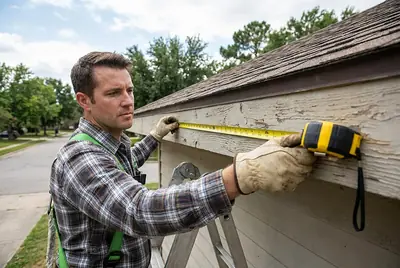
The measure that rules the job
Every fascia gets walked and taped before anything is ordered. The numbers written that day are the numbers the machine obeys.
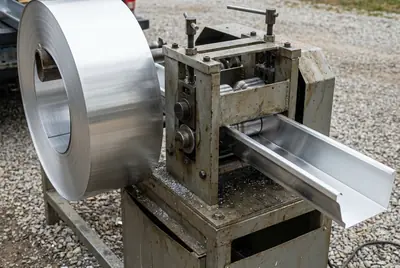
Forming at the curb
Flat coil goes into the roll former on the truck and a finished gutter profile comes out, cut off at the length of your run and not an inch more.
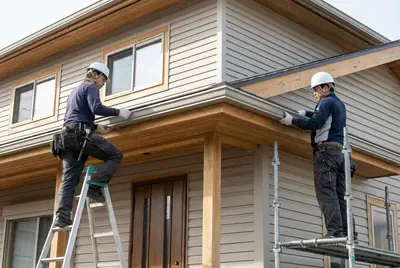
Hanging to a true pitch
Hidden hangers screwed into sound fascia, spaced for snow country where it applies, with a fall toward the outlet you can check with a hose.
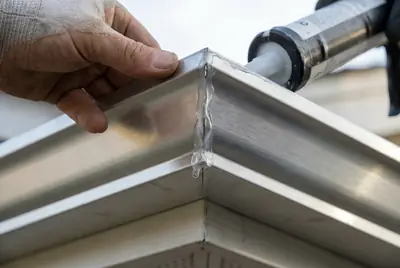
Corners mitered by hand
The only seams a seamless system has live at the corners, so ours are cut, lapped, riveted and sealed like they matter. Because they do.
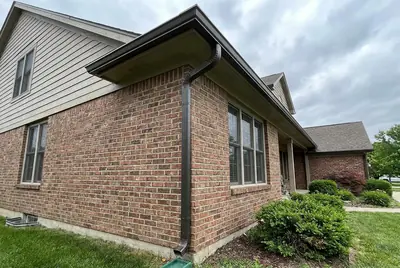
Downspouts that finish the story
Sized to the gutter that feeds them, dropped where the water should land, with extensions that carry it clear of the foundation.
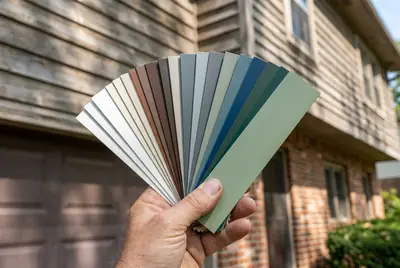
Color read against your trim
Factory painted coil comes in dozens of stock shades. We hold the chart against your fascia in daylight, not in a catalog.
The machine comes to you
Call the crew
One call to (855) 629-1479: ZIP, the kind of run and a word on the roofline. Under a minute, and nothing else is asked of you yet.
The measurer listens
On that same call the measurer hears the roofline out and books a time that suits the house.
Tape on fascia
Runs, drops, corners and colors are measured and settled on site. You get one written figure that holds.
The machine arrives
Forming day. The truck parks, the coil rolls, and each gutter comes off at the exact length it was measured for.
Hung and rinsed
Runs go up on hidden hangers, corners are sealed, downspouts dropped, and water is run through before we pull away.
What a foot of gutter costs
Stories, ladder access and fascia condition move a footage price up or down, which is why we measure before we promise. The figure you sign is the figure you pay.
Color comes off the coil, not out of a paint can
Seamless gutter stock arrives as factory painted aluminum coil, baked finish on both faces, in dozens of standing shades from bright white through bronzes and into true black. Because the color is cured onto the metal before it ever reaches the forming machine, it does not brush off, and it weathers evenly along the whole run.
Matching is done at your house. The measurer brings the coil chart to the fascia and reads it in your daylight, against your trim, your siding and your roof edge. Most homes want the gutter to disappear into the trim line; some want the downspouts to vanish against the siding instead, and the two choices are allowed to differ. If your trim sits between two stock shades, we will say so plainly and show you both instead of promising a custom tint we cannot roll.
What homeowners ask before signing
What does seamless actually mean here?
Each straight run is one continuous piece of metal, formed at your house to the length of that fascia. The only joints in the whole system sit at corners and outlets, where they are riveted and sealed by hand.
How long does the machine spend at my house?
For most homes the forming and the hanging fit inside a single visit. Long wraparound rooflines or three stories of ladder work can stretch it, and the quote says so before anyone commits.
Can you really match my trim color?
From dozens of factory painted coil shades, almost always closely enough that visitors never think about it. When your trim falls between two stock shades, you see both charts at the fascia and pick with your own eyes.
What happens to the gutters already on the house?
They come down the same day, fasteners and all, and leave in our truck for recycling. The tear off is its own line on the written quote, never a surprise.
Are corners a weak point?
They are the only seams the system has, which is exactly why they get the slow treatment: hand cut miters, riveted laps and sealant rated for wet metal. A corner done that way outlives the sealant tube it came from many times over.
Is a small house worth a seamless run?
Yes, the machine rolls a 20 ft run as happily as a 60 ft one. A small job minimum applies because the truck travels whole, and it is printed on the quote so you can judge it in writing.
Rooflines around Clark County
The terrain sets the pitch and the trees set the debris. The lists further down name every community the truck reaches from here.
Towns of Clark County on our route sheet
- Seamless Rain Gutters in Arkadelphia, AR (home to 10,611)
- Seamless Rain Gutters in Gurdon, AR (home to 2,580)
- Seamless Rain Gutters in Amity, AR (home to 730)
- Seamless Rain Gutters in Caddo Valley, AR (home to 655)
- Seamless Rain Gutters in Knoxville, AR (home to 511)
- Seamless Rain Gutters in Okolona, AR (home to 133)
- Seamless Rain Gutters in Gum Springs, AR (home to 120)
- Seamless Rain Gutters in Whelen Springs, AR (home to 38)
The rest of Arkansas, county after county
- Seamless Rain Gutters in Arkansas County, AR
- Seamless Rain Gutters in Ashley County, AR
- Seamless Rain Gutters in Baxter County, AR
- Seamless Rain Gutters in Benton County, AR
- Seamless Rain Gutters in Boone County, AR
- Seamless Rain Gutters in Bradley County, AR
- Seamless Rain Gutters in Calhoun County, AR
- Seamless Rain Gutters in Carroll County, AR
- Seamless Rain Gutters in Chicot County, AR
- Seamless Rain Gutters in Clay County, AR
- Seamless Rain Gutters in Cleburne County, AR
- Seamless Rain Gutters in Cleveland County, AR
- Seamless Rain Gutters in Columbia County, AR
- Seamless Rain Gutters in Conway County, AR
- Seamless Rain Gutters in Craighead County, AR
- Seamless Rain Gutters in Crawford County, AR
- Seamless Rain Gutters in Crittenden County, AR
- Seamless Rain Gutters in Cross County, AR
- Seamless Rain Gutters in Dallas County, AR
- Seamless Rain Gutters in Desha County, AR
- Seamless Rain Gutters in Drew County, AR
- Seamless Rain Gutters in Faulkner County, AR
- Seamless Rain Gutters in Franklin County, AR
- Seamless Rain Gutters in Fulton County, AR
- Seamless Rain Gutters in Garland County, AR
- Seamless Rain Gutters in Grant County, AR
- Seamless Rain Gutters in Greene County, AR
- Seamless Rain Gutters in Hempstead County, AR
- Seamless Rain Gutters in Hot Spring County, AR
- Seamless Rain Gutters in Howard County, AR
One ribbon of metal per run, and the drips have nowhere left to start.
Call (855) 629-1479