
Seamless Rain Gutters in Ashland County, Wisconsin (WI)
From one end of Ashland County to the other, our crews form gutters on site so each run goes up whole, with the coil color settled against your trim first.
The call costs nothing and commits you to nothing. Any trip fee for the measure is named when the date is set, and the written figure follows the measure.
Managing water drainage for your home in Ashland County
Installing custom-formed metal channels along your roofline stops water from damaging your foundation. These continuous metal systems prevent leaks by removing the joints where traditional sections often fail. You keep your home dry while protecting your exterior walls from rot.
Getting a free quote from a pro lets you compare options for your property. Licensed installers ensure the slope is perfect for heavy rainfall around here. That helps water flow away from your basement walls to save you money on future repairs.
Why continuous metal channels matter
Standard systems use many pieces joined together with plastic or metal connectors. Over time these seams leak and create messy streaks on your siding. A single piece of custom metal keeps everything sealed tight.
This design eliminates the weak points where debris usually gets stuck. Because you have no gaps, leaves and pine needles cannot snag during a storm. That means you spend less time cleaning and more time relaxing on your porch.
Choosing the right material for local weather
Local winters bring heavy snow that can weigh down standard materials. High-grade aluminum provides a lightweight solution that handles the freeze and thaw cycle well. Which means you can expect your system to stay straight through every season.
Copper offers a classic look that patinas beautifully as the years go by. Steel brings massive strength if you live near woods with heavy branch fall. Your choice of material directly affects how long the installation lasts before needing replacement.
| Material | Primary Benefit | Best For |
|---|---|---|
| Aluminum | Lightweight and rust proof | General rain management |
| Steel | Extreme structural strength | Heavy snow regions |
| Copper | High aesthetic value | Long term visual appeal |
What to verify with your local installer
A professional should always provide a written estimate that covers all materials and labor. Check that your hire is a licensed and insured installer to protect your investment. You want someone who follows local building codes for proper downspout placement.
Ask about their method for securing the long metal runs to your fascia. Proper hangers keep the weight balanced so your home stays safe during ice storms. That attention to detail provides a sense of tranquility for you and your family.
Ensuring peak performance for your roof
Keeping your new system clear of buildup helps it function as intended. Some folks add leaf guards to prevent clogs before they even start. This simple add-on saves you from climbing a ladder twice every autumn.
Look for a crew that knows the specific drainage needs of this part of Wisconsin. A well-designed pitch ensures water exits far from your foundation footings. Doing this prevents soil erosion around your house which preserves your landscaping.
Taking the next step for your home
You can easily get started by describing your current project to a local pro. They will visit your property to measure the exact length needed for your roofline. That creates a perfect fit for your unique structure and roof style.
Requesting a free quote provides the info you need to plan your budget. There is no obligation to move forward if the timing is not right. Just reach out today to secure your home against the elements before the next rain.
Key features for effective drainage
The seamless metal troughs act as a barrier against water damage. You avoid the high cost of basement repairs by moving water quickly. This durable exterior solution works hard so you do not have to worry.
Choosing a custom onsite fabrication service ensures you get the exact length required. You receive a watertight drainage system that prevents wood rot and siding staining. That makes your house look better and last much longer.
Final tips for a successful installation
Checking the downspout location is a smart way to manage overflow. You want water to exit into a splash block or underground pipe. This reliable water management keeps your yard from turning into a muddy mess.
Professional installation provides a peaceful living space throughout the wet months. You can browse local pros now to get your free quote. That quick action protects your biggest investment from the harsh local weather.
Why one piece beats twenty-two
A sectional gutter arrives from a shelf in short lengths and gets stitched together on your fascia. A seamless gutter leaves our machine as a single ribbon of aluminum, already the length of the run it will serve. Everything below follows from that difference.
Profiles and sizes we roll
The machine changes its forming head, not its habits. Whichever profile your house calls for, the run still comes off the coil in one piece.
Not sure which size your roof sheds into? That is a measuring question, not a guessing question, and one call books the measure.
The craft, run by run
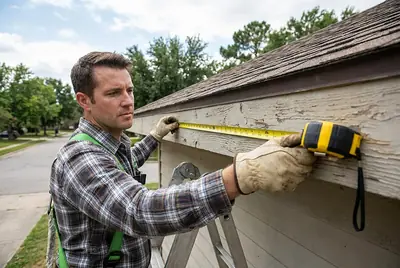
The measure that rules the job
Every fascia gets walked and taped before anything is ordered. The numbers written that day are the numbers the machine obeys.
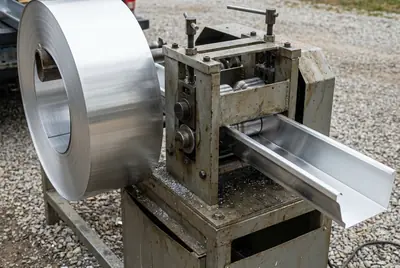
Forming at the curb
Flat coil goes into the roll former on the truck and a finished gutter profile comes out, cut off at the length of your run and not an inch more.
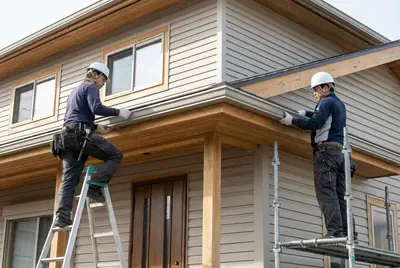
Hanging to a true pitch
Hidden hangers screwed into sound fascia, spaced for snow country where it applies, with a fall toward the outlet you can check with a hose.
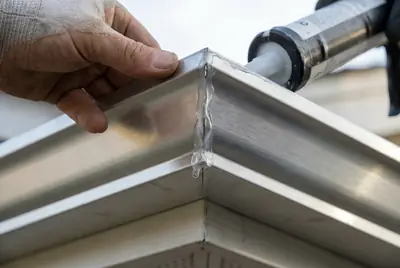
Corners mitered by hand
The only seams a seamless system has live at the corners, so ours are cut, lapped, riveted and sealed like they matter. Because they do.
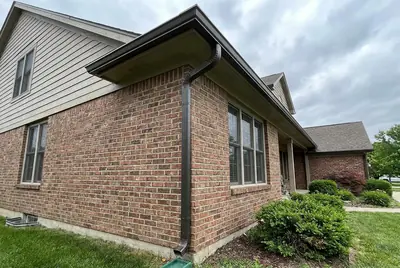
Downspouts that finish the story
Sized to the gutter that feeds them, dropped where the water should land, with extensions that carry it clear of the foundation.
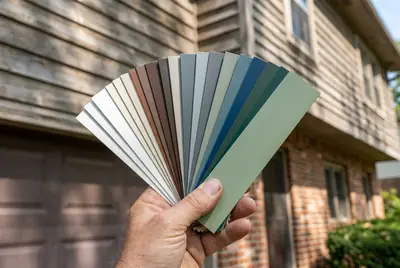
Color read against your trim
Factory painted coil comes in dozens of stock shades. We hold the chart against your fascia in daylight, not in a catalog.
The machine comes to you
Call the crew
One call to (855) 629-1479: ZIP, the kind of run and a word on the roofline. Under a minute, and nothing else is asked of you yet.
The measurer listens
On that same call the measurer hears the roofline out and books a time that suits the house.
Tape on fascia
Runs, drops, corners and colors are measured and settled on site. You get one written figure that holds.
The machine arrives
Forming day. The truck parks, the coil rolls, and each gutter comes off at the exact length it was measured for.
Hung and rinsed
Runs go up on hidden hangers, corners are sealed, downspouts dropped, and water is run through before we pull away.
What a foot of gutter costs
Stories, ladder access and fascia condition move a footage price up or down, which is why we measure before we promise. The figure you sign is the figure you pay.
Color comes off the coil, not out of a paint can
Seamless gutter stock arrives as factory painted aluminum coil, baked finish on both faces, in dozens of standing shades from bright white through bronzes and into true black. Because the color is cured onto the metal before it ever reaches the forming machine, it does not brush off, and it weathers evenly along the whole run.
Matching is done at your house. The measurer brings the coil chart to the fascia and reads it in your daylight, against your trim, your siding and your roof edge. Most homes want the gutter to disappear into the trim line; some want the downspouts to vanish against the siding instead, and the two choices are allowed to differ. If your trim sits between two stock shades, we will say so plainly and show you both instead of promising a custom tint we cannot roll.
What homeowners ask before signing
What does seamless actually mean here?
Each straight run is one continuous piece of metal, formed at your house to the length of that fascia. The only joints in the whole system sit at corners and outlets, where they are riveted and sealed by hand.
How long does the machine spend at my house?
For most homes the forming and the hanging fit inside a single visit. Long wraparound rooflines or three stories of ladder work can stretch it, and the quote says so before anyone commits.
Can you really match my trim color?
From dozens of factory painted coil shades, almost always closely enough that visitors never think about it. When your trim falls between two stock shades, you see both charts at the fascia and pick with your own eyes.
What happens to the gutters already on the house?
They come down the same day, fasteners and all, and leave in our truck for recycling. The tear off is its own line on the written quote, never a surprise.
Are corners a weak point?
They are the only seams the system has, which is exactly why they get the slow treatment: hand cut miters, riveted laps and sealant rated for wet metal. A corner done that way outlives the sealant tube it came from many times over.
Is a small house worth a seamless run?
Yes, the machine rolls a 20 ft run as happily as a 60 ft one. A small job minimum applies because the truck travels whole, and it is printed on the quote so you can judge it in writing.
Rooflines around Ashland County
The terrain sets the pitch and the trees set the debris. The lists further down name every community the truck reaches from here.
Towns of Ashland County on our route sheet
- Seamless Rain Gutters in Ashland, WI (home to 7,963)
- Seamless Rain Gutters in Sanborn, WI (home to 1,331)
- Seamless Rain Gutters in White River, WI (home to 921)
- Seamless Rain Gutters in Birch, WI (home to 801)
- Seamless Rain Gutters in Mellen, WI (home to 687)
- Seamless Rain Gutters in Morse, WI (home to 493)
- Seamless Rain Gutters in New Odanah, WI (home to 442)
- Seamless Rain Gutters in Butternut, WI (home to 426)
- Seamless Rain Gutters in Birch Hill, WI (home to 370)
- Seamless Rain Gutters in Glidden, WI (home to 323)
- Seamless Rain Gutters in La Pointe, WI (home to 246)
- Seamless Rain Gutters in Franks Field, WI (home to 163)
- Seamless Rain Gutters in Peeksville, WI (home to 141)
- Seamless Rain Gutters in Shanagolden, WI (home to 125)
- Seamless Rain Gutters in Marengo, WI (home to 115)
- Seamless Rain Gutters in Diaperville, WI (home to 37)
- Seamless Rain Gutters in Clam Lake, WI (home to 29)
The rest of Wisconsin, county after county
- Seamless Rain Gutters in Adams County, WI
- Seamless Rain Gutters in Barron County, WI
- Seamless Rain Gutters in Bayfield County, WI
- Seamless Rain Gutters in Brown County, WI
- Seamless Rain Gutters in Buffalo County, WI
- Seamless Rain Gutters in Burnett County, WI
- Seamless Rain Gutters in Calumet County, WI
- Seamless Rain Gutters in Chippewa County, WI
- Seamless Rain Gutters in Clark County, WI
- Seamless Rain Gutters in Columbia County, WI
- Seamless Rain Gutters in Crawford County, WI
- Seamless Rain Gutters in Dane County, WI
- Seamless Rain Gutters in Dodge County, WI
- Seamless Rain Gutters in Door County, WI
- Seamless Rain Gutters in Douglas County, WI
- Seamless Rain Gutters in Dunn County, WI
- Seamless Rain Gutters in Eau Claire County, WI
- Seamless Rain Gutters in Florence County, WI
- Seamless Rain Gutters in Fond du Lac County, WI
- Seamless Rain Gutters in Forest County, WI
- Seamless Rain Gutters in Grant County, WI
- Seamless Rain Gutters in Green County, WI
- Seamless Rain Gutters in Green Lake County, WI
- Seamless Rain Gutters in Iowa County, WI
- Seamless Rain Gutters in Iron County, WI
- Seamless Rain Gutters in Jackson County, WI
- Seamless Rain Gutters in Jefferson County, WI
- Seamless Rain Gutters in Juneau County, WI
- Seamless Rain Gutters in Kenosha County, WI
- Seamless Rain Gutters in Kewaunee County, WI
One ribbon of metal per run, and the drips have nowhere left to start.
Call (855) 629-1479